
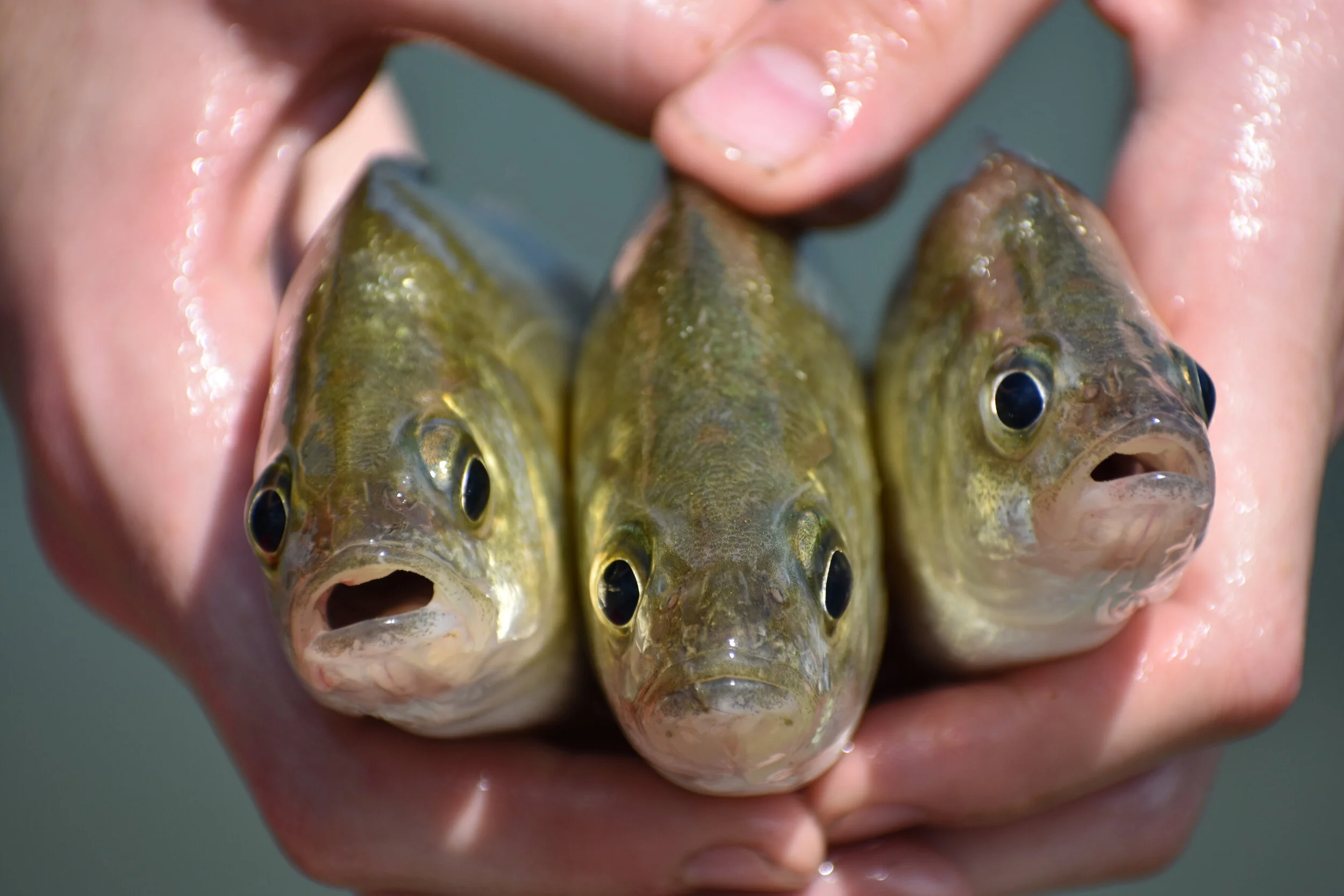
“Fish,” by Sarah Pagano
Versailles
It doesn’t take much to start a war. In hindsight, multiple complex factors play into the cause, but it takes just one small action for things to finally give in. War will erupt eventually anyway, but it’s the gun trigger that blows the powder keg.
I was in second grade when the kids from Braun Heights, one of the other district primary schools, were transferred to our school: Belfort Valley. My classmates and I were initially cautious of these new kids, and they were initially cautious with us. We skirted around each other for the first few weeks, only interacting when necessary. Under normal circumstances, we would eventually learn to get along and become friends with one another. Like how under normal circumstances, we would have met these kids in middle school. But normalcy is a rare and naive expectation of life. Nothing ever goes as planned.
It all went down starting with a bump. You can say that about anything, though. My parents met after running into each other at their university library. I got fired from my internship after a white-collar ran into me and spilled my coffee onto his shirt. The bullet that bumped into Franz Ferdinand’s head spawned the dissolution of old-world empires and ushered in a new age of military technology, and forever hanged the way we perceive the world. And maybe in a way, this incident was our World War I for those of us in Ms. Kaiser’s second-grade class—an undeniable and permanent shift in the school social dynamics.
So I bumped into Gabriel—a newcomer—and he fell onto the floor, along with his metal lunch box. The poor hero on the tin was done for, the big dent in the box inflated his head like a blimp. The dent probably crushed that kid’s chips, bruised his apple, and punctured his juice box.
Gabriel was fine, not even a scratch. But that’s not what incurred his wrath. He took one look at his malformed lunch box and turned to me, shouting “Hey!” I opened my mouth to spatter out an apology, but he yanked my sack lunch out of my hands and slammed it onto the floor. The contents of the bag spilled out, and I could see my chips were crushed, my juice box was leaking, and my apple bounced out the cafeteria doors. That all sucked, but what was really damaged was my pride. I could already hear snickering coming from the table next to us. I was embarrassed but also pissed. It was an accident!
And I had to do something back.
Let’s take a second to bless poor Mary Marie McGuire. Poor girl had enough trouble with her unfortunate name and thick chunky glasses, but also with her cafeteria lunch: I grabbed her still-unopened chocolate milk and crushed the carton over this kid’s head. I threw the empty carton at his face for good measure. I already knew the lunch aides were looking over their magazines at the sound of twenty-six second graders gasping. I didn’t have much time to think before this kid’s skinny little body threw itself onto mine. Landing on the ground beside my destroyed lunch, I swatted my hands blindly, trying to hit this kid before he hit me. Before he could sucker-punch me, the lunch aides separated us. One of them handed him a single-ply napkin to clean up his head, face, and wet shirt. The head aide was about to reprimand us when someone let out a war cry: “Food fight!”
And that was it. Kids threw around everything they had planned to eat for lunch. Fruit was thrown, juice was dumped, cold cuts slapped onto faces. Bits of yogurt and pudding splashed onto us like shrapnel. Edie even took the cupcake packed in her metal box and smashed it into Mary Marie McGuire’s face. It was all in good fun though. Everyone was laughing and cheering like it was field day. It was a joyous and lighthearted occasion; I thought everyone would get along.
Of course, someone had to take it too far. Seemingly out of nowhere, someone let out a wail like an air raid siren. The entire room went silent. And that’s when I noticed David over a wailing Manny, whose lap was soaked and peppered with bits of carrots and rice. David poured his steaming soup from his thermos straight onto Manny’s lap.
The battle was over. I took a look around the cafeteria, seeing our food had far exceeded our single table. Halfway across the room from us were the first graders. It seemed that our eruption inspired them to throw their food around, too. The lunch aide tugged on David’s ear when the principal, vice-principal, the custodian, and Ms. Kaiser all stormed into the room.
The cafeteria was shut down for a deep cleaning, and we were wrangled outside. Our parents were called to the school to either bring some spare clothes or to take our filthy asses home. But before those calls were made, Ms. Kaiser had something to say to us.
“I cannot believe this buffoonery! You are in second grade. You should be acting like role models for the first graders and the kindergartners! THEY ARE BETTER BEHAVED THAN YOU!”
Some of us flinched hard when she raised her voice. I did because I was not used to hearing a person shout so loud. I knew the other kids did because they know the sound too well. Some kids weren’t even moving. Manny stayed sitting at the lunch table while the lunch ladies dabbed his pants with paper towels. I tuned back to Ms. Kaiser’s tirade. “I have three little kids at home who make huge messes and ruin all the walls and furniture. I spend hours every single weekend cleaning up after them, and then they go and make another mess!” She started panting, “I have enough of this,” she gestured towards us, “at home to deal with. When I come to work every day, I expect better behavior. And you’ve FAILED—!” The principal and other assorted faculty apparently only heard her then. Two teachers for the older grades rubbed her back and gently led her away from us.
There was a sudden hand on my back. “She seems like a handful,” a familiar voice said. I turned to my mother, who was carrying a bath towel over her shoulder. The parents had begun trickling onto school grounds.
After she aggressively scrubbed my head, my mother and I were dragged back inside, along with David, Gabriel, and their parents. We were ushered into a conference room with the principal, vice-principal, another staff member I didn’t recognize, and Manny and his parents.
The meeting was long and tense, but it wasn’t that convoluted, even for a seven-year-old. Manny’s mother immediately threatened to sue the school, the principal, the district, the superintendent, and David’s parents for good measure. The other faculty member, who I later learned was actually the school psychologist, diffused the situation.
“I'm sure that David didn’t mean to cause any harm to Manny.” She turned to David, then said, “That being said, you did hurt Manny and you need to apologize for that. Apologize to David, his parents, and to your mother.”
David was hunched over the table, not looking at anyone. He lifted his head by a couple of degrees and said in the meekest voice I have ever heard from a kid, “I’m sorry, Manny, for hurting you. I’m sorry, Manny’s parents, for hurting your son, and Mom I’m sorry…” His face scrunched up for a moment. He was about to cry. “Mom, I’m sorry for wasting the soup.”
The principal groaned into his hands.
To leave out all the boring details, the four of us were put in separate classes. My mother tried to propose losing recess privilege, an actual punishment, but the school decided to appease the other parents. When we got home, my mother hauled the big case of Nesquik packs and threw them on the top shelf where I couldn’t reach it, not even with a chair. “No chocolate milk for you for two weeks.” Somehow that’s what upset me the most that day.
The aftermath of the fight was much more brutal than any punishment the school could have given me. Braun and Belfort kids regressed back to exclusively interacting with their peers. There were several skirmishes between the groups for the rest of the year, fighting over art supplies, sports equipment, and school lunches. The aides stalked us like torpedoes, so nothing too bad ever happened again. I moved away two years later, so I don’t know how long this rift lasted. But it was still strong on my last day; not a single Braun kid said goodbye.
I was kept in Ms. Kaiser’s class, which I was happy about at first. The class got a substitute teacher the next day, who explained that Ms. Kaiser was going to be out for a few days because she wasn’t “feeling well.” I overheard my mother gossiping on the phone to one of her PTA friends later that day, saying something about Ms. Kaiser going on a “sabbatical.” “I don’t want someone that unstable in a room with my kid,” my mom said. I didn’t understand what that meant at the time.
Maybe Ms. Kaiser saw this coming. She returned to class a week later, walking in with a half-hearted greeting, “Good morning kids.” We made her a “Welcome back!” poster with all our names, which she barely acknowledged. She looked around the room, stopping when we made eye contact. She audibly groaned, pinching her nose. After a couple of beats she exhaled, stared me dead in the eye, and said, “It’s only going to get worse, isn’t it?”

Julia Collins
Julia is a sophomore writing major with a creative concentration and an English minor. She enjoys writing humorous and satiric poems and short stories.
More from Chapter I:

